
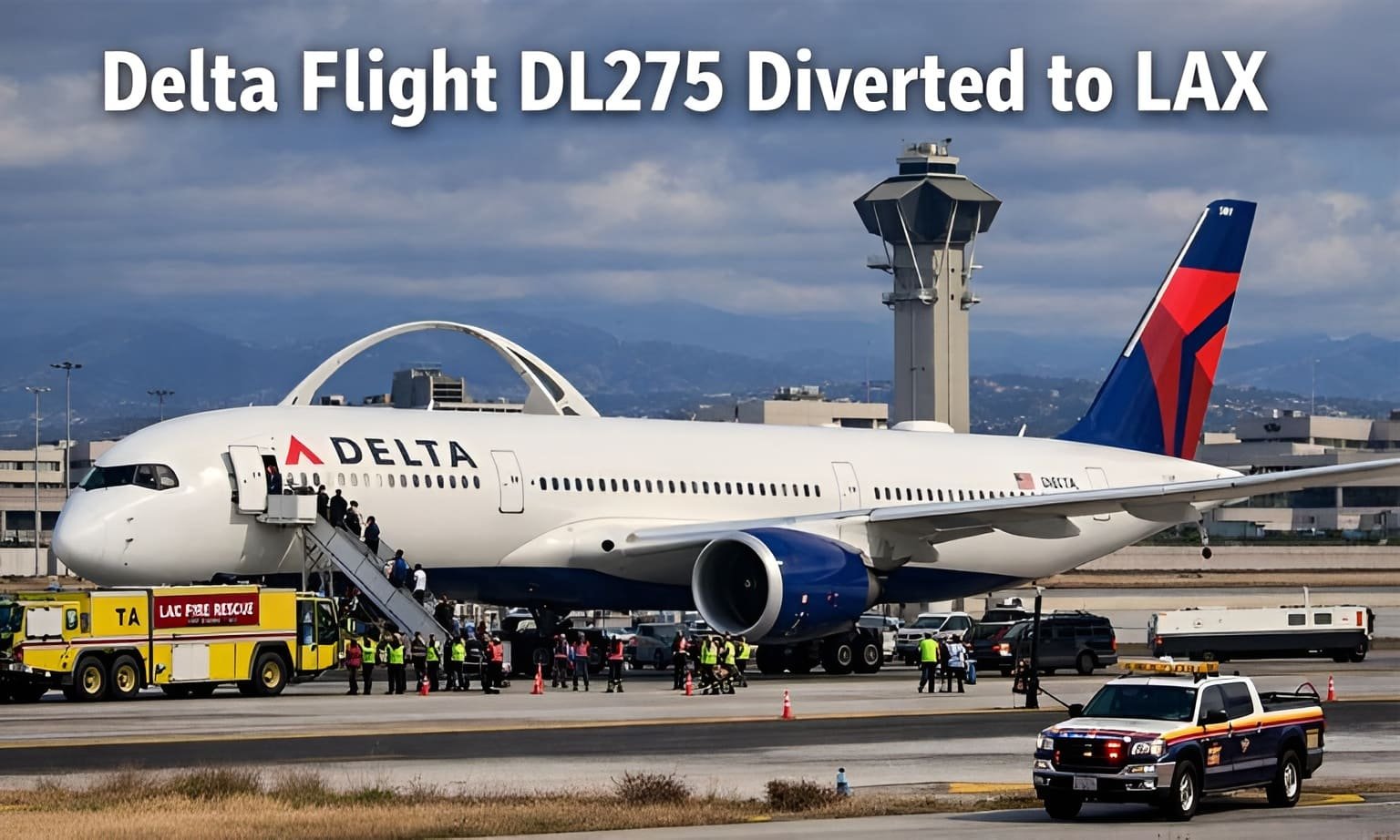
The Delta Flight DL275 diverted LAX incident refers to an unexpected mid-route diversion where the aircraft was rerouted to Los Angeles International Airport for safety and operational reasons. Such diversions usually occur due to technical issues, weather disruptions, or medical emergencies. The flight landed safely, and passengers were accommodated following standard airline safety protocols, ensuring minimal risk and quick operational recovery.
The Delta Flight DL275 diverted LAX event highlights how modern aviation prioritizes passenger safety above all else. During the flight, an unexpected situation required the aircraft to change its original destination and land at Los Angeles International Airport instead. Aviation diversions like this are carefully managed by pilots and air traffic controllers using strict safety procedures. Although such incidents may cause delays and inconvenience, they are essential for ensuring aircraft integrity and passenger well-being. This article explores the full timeline, possible causes, airport response, passenger experience, and airline procedures that explain why such diversions happen and how safely they are handled.
Overview of Delta Flight Operational Diversion and Aviation Safety Context
Commercial aviation operates under strict global safety systems designed to prioritize human life over schedule. When any irregularity appears during flight, pilots are trained to take immediate precautionary measures. A diversion is not necessarily a sign of danger but rather a controlled safety decision. In this case scenario involving a major international carrier, the aircraft was rerouted to a safer or more suitable airport. Such decisions are coordinated between cockpit crew, airline operations, and air traffic control to ensure safe landing conditions and minimal operational disruption.
Understanding the Incident Behind Delta Flight DL275 Diverted LAX Situation
The Delta Flight DL275 diverted LAX situation represents a mid-flight operational change where the aircraft did not continue to its original destination. Instead, it was redirected to Los Angeles International Airport. This type of event is typically triggered by real-time assessments of aircraft systems or environmental conditions. While passengers may experience uncertainty, the flight crew follows strict aviation protocols. The decision is made only when continuing the journey is considered less safe than landing at an alternate airport for inspection or assistance.
Detailed Timeline of Events Leading to the Diversion Decision
Flight diversions follow a structured timeline that begins with detection of an irregularity. The cockpit crew first evaluates the situation using onboard diagnostics and communication with control centers. Once confirmed, air traffic control is notified to identify the nearest suitable airport. In this case, LAX was selected due to its operational capacity and emergency readiness. The aircraft then adjusted its flight path accordingly and prepared for descent. Every step is coordinated to maintain maximum safety and ensure smooth handling upon arrival.
Common Technical and Environmental Factors Behind Flight Diversions
Aircraft diversions can occur due to multiple operational factors such as technical alerts, cabin pressurization concerns, or onboard system irregularities. Weather conditions like turbulence or storms also influence rerouting decisions. In rare cases, medical emergencies onboard require immediate landing. Aviation systems are designed to detect even minor anomalies early, allowing preventive action. The goal is not only to protect passengers but also to preserve aircraft performance. Such precautionary decisions ensure that small issues do not escalate into serious risks during flight.
Why Los Angeles International Airport Was Selected for Emergency Landing
Los Angeles International Airport is one of the most capable aviation hubs in the world, making it suitable for handling emergency or unscheduled landings. It offers advanced runway infrastructure, emergency response teams, and technical maintenance support. When an aircraft requires diversion, proximity and airport readiness are critical factors. LAX provides both international handling capacity and rapid response services. This makes it a logical choice for pilots when quick and safe landing decisions are required during unexpected flight situations.
Safety Protocols Followed During Mid-Air Diversion Procedures
When a diversion is initiated, multiple safety layers activate simultaneously. Pilots communicate continuously with air traffic control while adjusting altitude and speed for safe rerouting. Cabin crew prepares passengers for landing procedures while maintaining calm and order. Emergency equipment is checked as a precaution. Ground teams at the destination airport are alerted in advance to prepare for landing support. These structured protocols ensure that even unexpected changes in flight plans are managed with precision and maximum passenger safety.
Passenger Experience During Unexpected Flight Diversion Events
Passengers often experience confusion or concern when a flight changes direction unexpectedly. However, cabin crew members are trained to provide clear instructions and reassurance. In most cases, passengers are informed that safety is the priority and the situation is under control. Comfort measures, updates, and assistance are provided during the landing process. Although delays may occur, passengers typically reach their destination safely after rebooking or onward travel arrangements organized by the airline.
Airline Operational Response and Ground Handling Procedures
Once the aircraft lands, airline ground teams immediately begin inspection and coordination processes. Engineers assess the aircraft for any technical irregularities, while customer service teams manage passenger needs. Luggage handling, rebooking, and accommodation support are arranged depending on delay duration. Airlines maintain strict post-landing protocols to ensure both aircraft readiness and passenger satisfaction. These operations are essential in restoring normal flight schedules while maintaining transparency and efficiency throughout the recovery process.
Role of Air Traffic Control in Managing Emergency Flight Changes
Air traffic control plays a critical role in ensuring safe navigation during diversions. Controllers guide aircraft through alternative flight paths while maintaining separation from other air traffic. They also coordinate landing clearance and runway allocation at the destination airport. Communication between pilots and controllers is continuous and highly precise. This coordination ensures that even sudden changes in flight plans are executed smoothly without compromising safety or disrupting overall airspace management.
Aircraft System Monitoring and Pilot Decision-Making Process
Modern aircraft are equipped with advanced monitoring systems that constantly track engine performance, cabin pressure, and navigation data. Pilots use this information to make real-time decisions during flight. If any system shows irregular readings, immediate evaluation begins. The decision to divert is never taken lightly and involves consultation with airline operations and safety teams. This structured decision-making process ensures that passenger safety always remains the highest priority during any in-flight anomaly.
Landing Procedures and Safety Measures at Diversion Airport
When an aircraft approaches a diversion airport, landing procedures are carefully adjusted based on runway conditions and emergency readiness. Pilots coordinate descent patterns with air traffic controllers to ensure smooth landing alignment. Emergency teams remain on standby during touchdown as a precaution. After landing, standard checks are conducted before passengers are allowed to disembark. These procedures ensure that any potential risk is fully assessed and controlled immediately after arrival.
Post-Landing Inspection and Flight Recovery Operations
After a diversion landing, technical teams begin a detailed inspection of the aircraft. This includes system diagnostics, mechanical checks, and safety verification procedures. If no major issues are found, the aircraft may be cleared for continued operations. If repairs are required, maintenance schedules are adjusted accordingly. Airline operations teams also manage passenger rebooking and onward travel arrangements. This structured recovery process ensures minimal disruption and maintains overall operational safety standards.
Aviation Investigation and Reporting Standards After Diversions
Every flight diversion is documented for internal review and regulatory compliance. Airlines analyze flight data, crew reports, and technical logs to understand the root cause of the incident. Aviation authorities may also review the case to ensure compliance with safety regulations. These investigations are not meant for blame but for improving future safety systems. Lessons learned from such events contribute to stronger aviation protocols and improved aircraft performance monitoring systems globally.
Importance of Diversions in Modern Airline Safety Systems
Flight diversions are an essential part of modern aviation safety culture. They demonstrate how airlines prioritize human life and operational caution over scheduling efficiency. Although passengers may experience inconvenience, these decisions significantly reduce risk in unpredictable situations. The aviation industry continuously improves its systems to detect and manage issues early. Diversions therefore reflect a highly responsible safety framework that ensures every flight maintains the highest level of protection throughout its journey.
Conclusion on Delta Flight Diversion and Aviation Safety Reliability
The Delta Flight DL275 diverted LAX case highlights the importance of structured safety protocols in aviation. Every decision taken during the flight was aimed at protecting passengers and ensuring safe aircraft operation. From cockpit assessment to airport landing coordination, the entire process demonstrates the effectiveness of modern aviation systems. While such events may seem alarming, they are proof of how well-prepared the industry is to handle unexpected situations with precision and care.
FAQs
Q1: Why do flights get diverted during travel?
Flights are diverted due to safety concerns like technical issues, weather changes, or medical emergencies onboard.
Q2: Is a flight diversion dangerous for passengers?
No, diversions are precautionary and are designed to increase passenger safety, not indicate danger.
Q3: What happens after a diverted flight lands?
The aircraft is inspected, and passengers are assisted with rebooking or alternative travel arrangements.
Q4: How do pilots decide where to divert a flight?
Pilots choose the nearest suitable airport based on safety, runway availability, and emergency support.
Q5: Are passengers compensated for flight diversions?
Compensation depends on airline policy and the cause of the diversion or delay.
Q6: Do diversions delay the entire flight schedule?
Yes, diversions can cause delays, but airlines work to minimize disruption as much as possible.
Q7: Who controls a flight during an emergency diversion?
Pilots and air traffic control jointly manage the flight to ensure safe rerouting and landing.
Fore more info: breakzone.co.uk
