
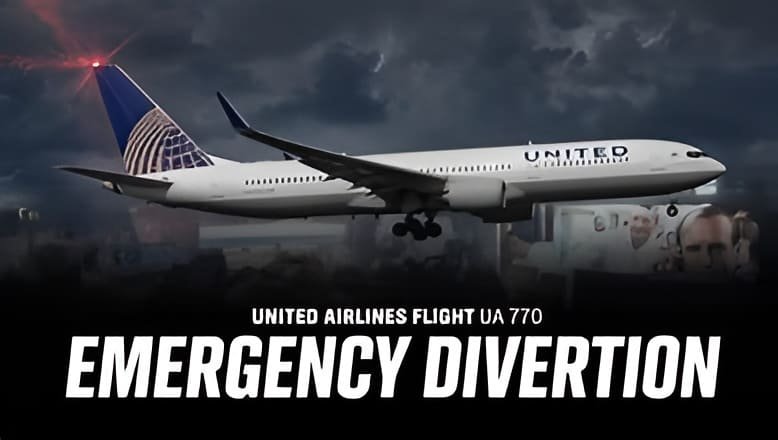
The United Airlines Flight UA770 emergency diversion refers to a precautionary aviation procedure where the aircraft changed its planned route and landed at an alternate airport due to operational safety concerns. Such diversions are standard in commercial aviation and are handled through strict coordination between pilots and air traffic control to ensure passenger safety, aircraft protection, and regulatory compliance.
A flight diversion is a controlled safety action taken when an aircraft cannot continue its planned route. In the United Airlines Flight UA770 emergency diversion incident complete analysis report, the event demonstrates how aviation systems prioritize safety over schedule. Diversions may be triggered by weather changes, technical alerts, medical emergencies, or air traffic restrictions. Pilots evaluate real-time data, consult with air traffic control, and select the safest alternate airport. Cabin crew ensure passenger safety and communication throughout the process. This article explains aviation protocols, decision-making systems, and airline response strategies that make modern air travel one of the safest transportation methods globally.
What Makes Aviation Diversions a Critical Safety System?
In modern aviation, a flight diversion is not a failure but a safety-first decision system designed to protect passengers and aircraft. Airlines operate under strict international regulations where safety always overrides schedule pressure. When a potential risk appears mid-flight, pilots are trained to evaluate the situation instantly. This includes analyzing onboard systems, weather conditions, fuel range, and airport availability. A diversion ensures that any uncertainty is resolved on the ground rather than in the air. This structured approach is why commercial aviation maintains one of the highest safety records globally.
Understanding United Airlines Operational Safety Framework
United Airlines operates under FAA-regulated safety systems combined with advanced digital monitoring tools. Every aircraft is tracked in real time by operations control centers that analyze performance data continuously. Pilots receive alerts for any irregular system behavior, allowing immediate corrective decisions. Maintenance teams also play a proactive role by ensuring aircraft are inspected before and after every flight. This layered safety ecosystem ensures that even rare situations like emergency diversions are handled with precision, coordination, and global aviation compliance standards.
Flight UA770 Operational Context and Route Stability
The flight identified as UA770 operates within a structured commercial airline network where every route is pre-approved by aviation authorities. However, aviation environments are dynamic. Weather systems, air traffic congestion, and technical parameters can change during flight. Pilots continuously monitor these variables using onboard systems and ground communication. If conditions deviate from safe operational thresholds, adjustments such as rerouting or diversion may be required. This adaptability ensures safe completion of every journey regardless of mid-air changes.
Key Triggers Behind Emergency Diversion Decisions
Emergency diversions occur due to multiple real-world aviation factors. The most common include sudden weather instability such as thunderstorms or turbulence zones. Technical alerts from aircraft sensors may also trigger precautionary action. Medical emergencies onboard can require immediate landing. Additionally, airspace restrictions or airport congestion can force rerouting decisions. In all scenarios, the key principle remains the same: risk prevention over operational continuity. Pilots are trained to treat even minor anomalies seriously to avoid escalation.
Pilot Decision-Making Under Real-Time Flight Pressure
Pilots play the most critical role in diversion scenarios. When a potential issue arises, they follow structured aviation checklists rather than emotional judgment. They assess fuel reserves, distance to alternate airports, weather patterns, aircraft system status, and passenger safety conditions. Communication with air traffic control is continuous. Importantly, diversion decisions are collaborative, not individual guesses. This disciplined process ensures that every decision is backed by data, training, and regulatory protocols designed to eliminate risk.
Air Traffic Control Coordination During Emergency Situations
Air traffic control (ATC) acts as the central communication hub during diversions. Once a pilot declares a potential diversion, ATC immediately reorganizes airspace to prioritize the affected aircraft. They identify the nearest suitable airport, coordinate runway clearance, and alert emergency response teams if necessary. ATC ensures that no conflicting air traffic interferes with the diverted flight path. This synchronized coordination is essential for safe landing execution in time-sensitive aviation scenarios.
Passenger Experience and Cabin Crew Response System
From a passenger perspective, a diversion may feel unexpected, but cabin crew are trained to manage such situations calmly. Clear announcements are made to avoid confusion and maintain trust. Passengers are instructed to remain seated and follow safety protocols. Cabin crew provide reassurance and updates throughout the process. After landing, airlines assist passengers with rebooking, accommodation, and onward travel arrangements. Although delays occur, safety remains the highest priority at every stage of the journey.
Aircraft Technology and Real-Time Safety Monitoring
Modern aircraft are equipped with advanced monitoring systems that track engine performance, navigation accuracy, and structural integrity. These systems provide real-time alerts to pilots if anomalies are detected. Predictive maintenance technology used by airlines like United Airlines helps identify potential issues before flights even take off. This reduces in-flight risk significantly. In diversion scenarios, onboard systems help pilots make informed decisions quickly and accurately, improving overall safety outcomes.
Weather Systems as a Primary Aviation Risk Factor
Weather is one of the most influential factors in flight routing decisions. Severe turbulence, storm systems, and wind shear can make certain air corridors unsafe. Pilots rely on radar and meteorological data to avoid these hazards. Weather conditions can change rapidly, requiring immediate rerouting or diversion. Airlines invest heavily in weather forecasting systems to minimize disruptions and ensure safe operational planning for all flights.
Technical Irregularities and Preventive Aviation Protocols
Aircraft systems are designed with multiple redundancy layers, meaning backup systems activate if one component fails. However, even minor technical alerts must be treated seriously. Pilots follow strict diagnostic procedures to determine severity. If uncertainty remains, diversion is often the safest decision. Once the aircraft lands, engineering teams perform detailed inspections before clearing it for future flights. This preventive approach ensures long-term aviation safety reliability.
Strategic Airport Selection During Emergency Landings
Choosing the correct diversion airport is a critical operational decision. Factors include runway length, emergency services availability, weather stability, and airport congestion. Larger international airports are often preferred due to better infrastructure and rapid response capabilities. Coordination between pilots and ATC ensures the selected airport can safely accommodate the aircraft. Emergency teams are usually alerted in advance to prepare landing support systems.
Airline Communication Strategy and Passenger Trust
Effective communication is essential during flight disruptions. Airlines provide timely updates through cabin announcements and operational messaging systems. Transparency helps reduce passenger anxiety and confusion. After landing, customer service teams manage rebooking, compensation policies, and travel adjustments. Clear communication strengthens passenger trust and ensures smooth handling of unexpected aviation situations.
Global Aviation Safety Regulations and Oversight
Aviation safety is governed by strict international bodies such as ICAO and FAA. These organizations enforce standardized procedures for handling diversions, emergencies, and incident reporting. Airlines must document every operational decision for regulatory review. Regular audits ensure compliance with safety standards. This global regulatory framework ensures consistent aviation safety across all international carriers, including United Airlines.
Continuous Improvement Through Incident Analysis
Every aviation diversion contributes to long-term safety improvement. Airlines analyze flight data to identify patterns and enhance operational protocols. Pilot training programs are updated based on real-world scenarios. Aircraft systems are also improved through engineering feedback loops. This continuous improvement cycle ensures aviation safety evolves with emerging risks and technological advancements.
Final Conclusion – Why Diversions Strengthen Aviation Safety
The United Airlines Flight UA770 emergency diversion incident complete analysis report highlights how modern aviation prioritizes safety through structured decision-making systems. Diversions are not failures but evidence of highly responsive safety architecture. From pilots to air traffic controllers and airline operations teams, every layer works in coordination to protect passengers. This system-driven approach ensures aviation remains one of the safest transportation industries in the world.
FAQs
1. What is an emergency flight diversion?
A safety procedure where a flight lands at an alternate airport.
2. Is flight diversion dangerous?
No, it is a preventive safety action.
3. What causes flight diversions?
Weather, technical issues, or medical emergencies.
4. Who makes the diversion decision?
The pilot with ATC coordination.
5. Do passengers face risk during diversion?
No, safety is fully maintained.
6. How long do diversions delay flights?
It depends on inspection and re-routing time.
7. Is UA770 diversion officially confirmed?
Public details vary; airlines handle such cases under standard safety protocols.
Fore more info: Breakzone.co.uk
